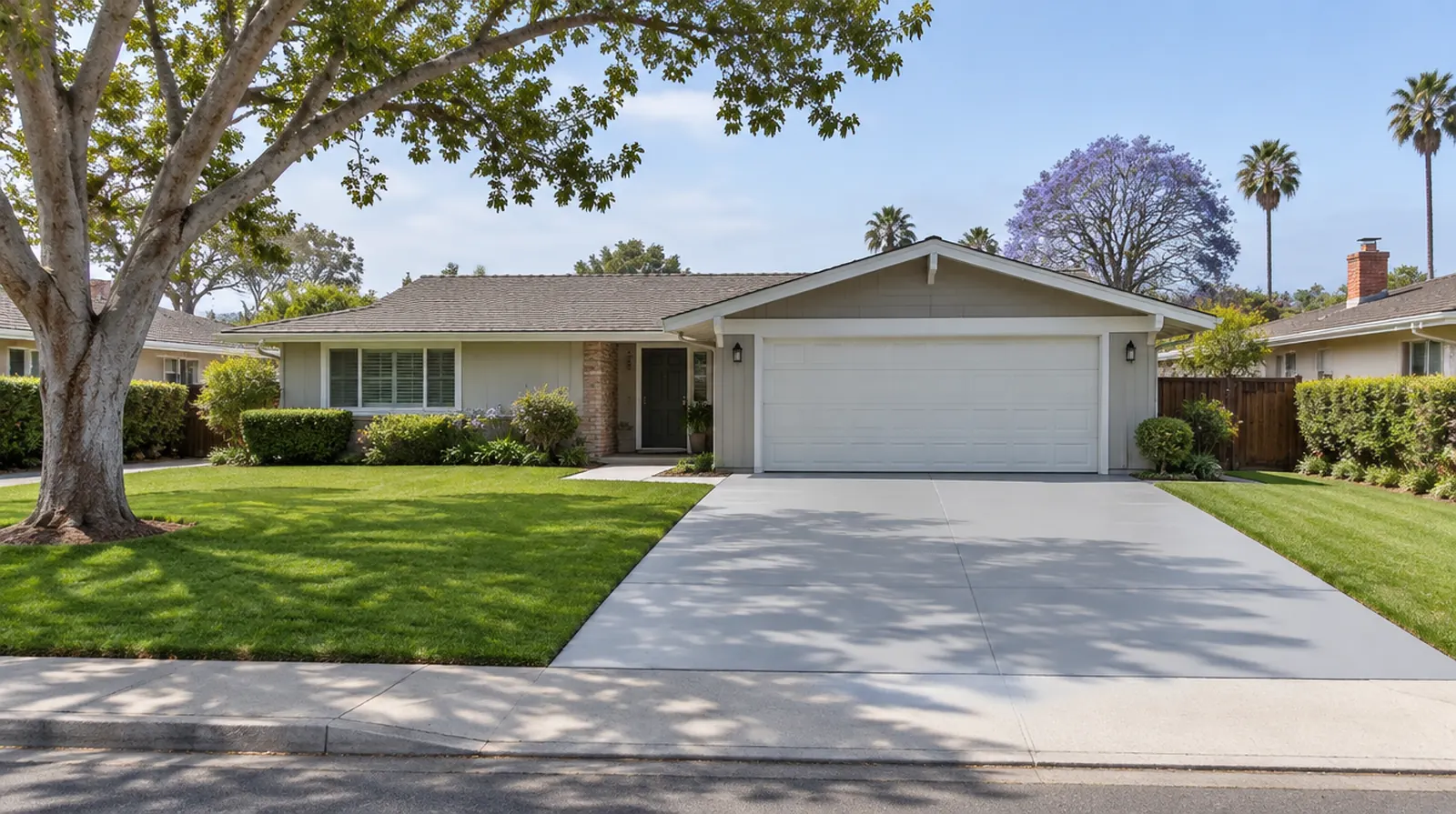
Driveways in an older city
Most local driveways are decades old. They carry oil drips, tire marks, rust stains from sprinklers, root lift from old trees and cracks from years of settling. Many are wide enough for several cars and a boat or trailer. A tired driveway makes the whole home look older than it is, and stains keep spreading if the concrete stays bare.
Options for driveways
Penetrating sealer
The simplest option keeps the natural concrete look while repelling water and oil. It does not make the surface slick and lasts several years.
Color-enhancing sealer
Acrylic sealers deepen color on stamped or colored driveways and add a soft sheen. We add grit for traction.
Decorative coatings
Polyaspartic or concrete resurfacing systems can transform a stained, patched drive into a uniform, attractive surface. These coatings must be UV-stable and textured for safety outdoors.
Our process
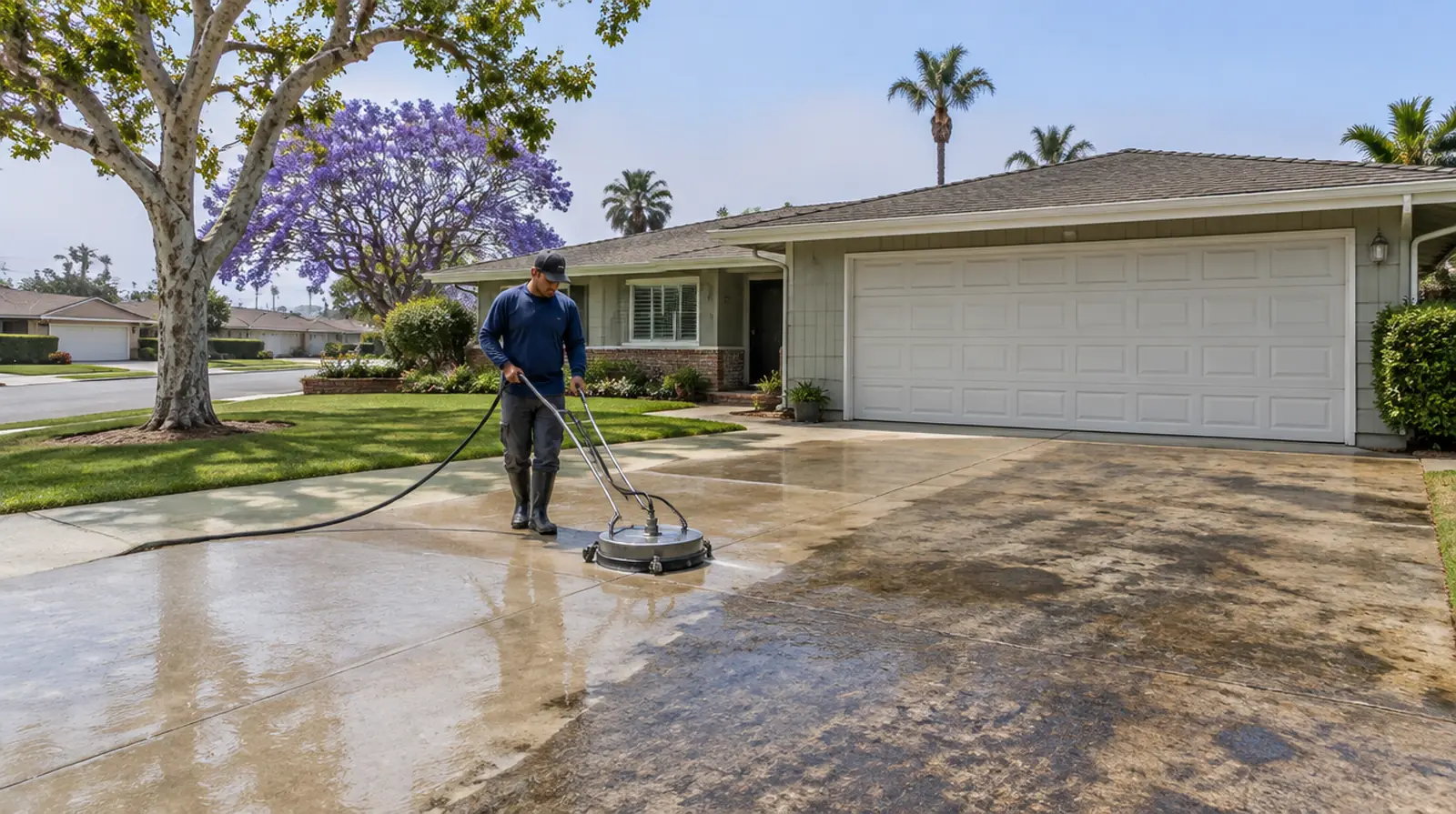
We deep clean with hot water pressure washing and degreasers, treat oil stains and rust and let the slab dry. Cracks are cleaned and filled with flexible joint filler that moves with the concrete. Spalled areas can be patched. Then we apply the sealer or coating system. We block the driveway until it is ready for vehicles.
Tree roots and lifted sections
Older shade trees often lift driveway panels. Coatings cannot fix a raised panel, but we can grind small lips to reduce trip hazards and fill joints. Large lifts may need a concrete contractor first, and we will tell you honestly.
Boats, RVs and trailers
Side yards and driveway extensions that hold boats and trailers see heavy loads and drips. A penetrating sealer or tough coating protects them from stains and makes cleanup easier.
Care
Rinse the driveway every few months and spot clean oil drips quickly. Reseal on the schedule we recommend for your product.
Questions
Can you remove old oil stains?
We can greatly reduce most, though very old stains may leave a shadow.
How long before I can drive on it?
Usually one to three days, depending on the product.
Will it be slippery?
We use penetrating sealers or add grit to keep traction.
Refresh your curb appeal. Request a driveway estimate.
Approaches and sidewalks
The section of driveway between the sidewalk and the street, called the approach, often sits under city rules. Before coating, we check what is allowed so your work stays on your property and meets local requirements. Sidewalk panels are usually left uncoated.
Choosing a color
For driveways, lighter grays and natural concrete tones stay cooler and hide tire marks better than very dark colors. A clear sealer keeps the original look. Colored sealers can refresh faded stamped drives in tones like terracotta, sand or slate. We test a small area first.
Leaf and berry stains
Mature trees drop leaves, berries and sap that leave dark stains on bare concrete. Sealed concrete resists these stains and makes cleanup a matter of a quick rinse. For drives under heavy canopy, we recommend sealing more often to keep protection strong, and we can suggest gentle cleaners that remove tannin stains without etching the surface.
Resurfacing worn concrete
When the top of a driveway is rough, pitted or scaling, a sealer alone will not hide it. A thin polymer-modified overlay can be troweled or sprayed over the old surface to create a fresh, even finish. It can be textured, colored or given a knockdown pattern, then sealed. Resurfacing costs far less than tearing out and repouring, and it can make an old ranch-home drive look new again in a few days with very little mess compared to demolition.
Garage-to-driveway transitions
The lip where the garage floor meets the drive often chips and collects water. We repair this edge carefully so both surfaces look finished and drain properly.
Many neighbors ask about the work once they see a finished drive, and we often coat several homes on the same block within a season, which keeps scheduling simple for everyone.
Get a driveway quote
Call (714) 942-1604 for a free estimate.