Why floors fail here
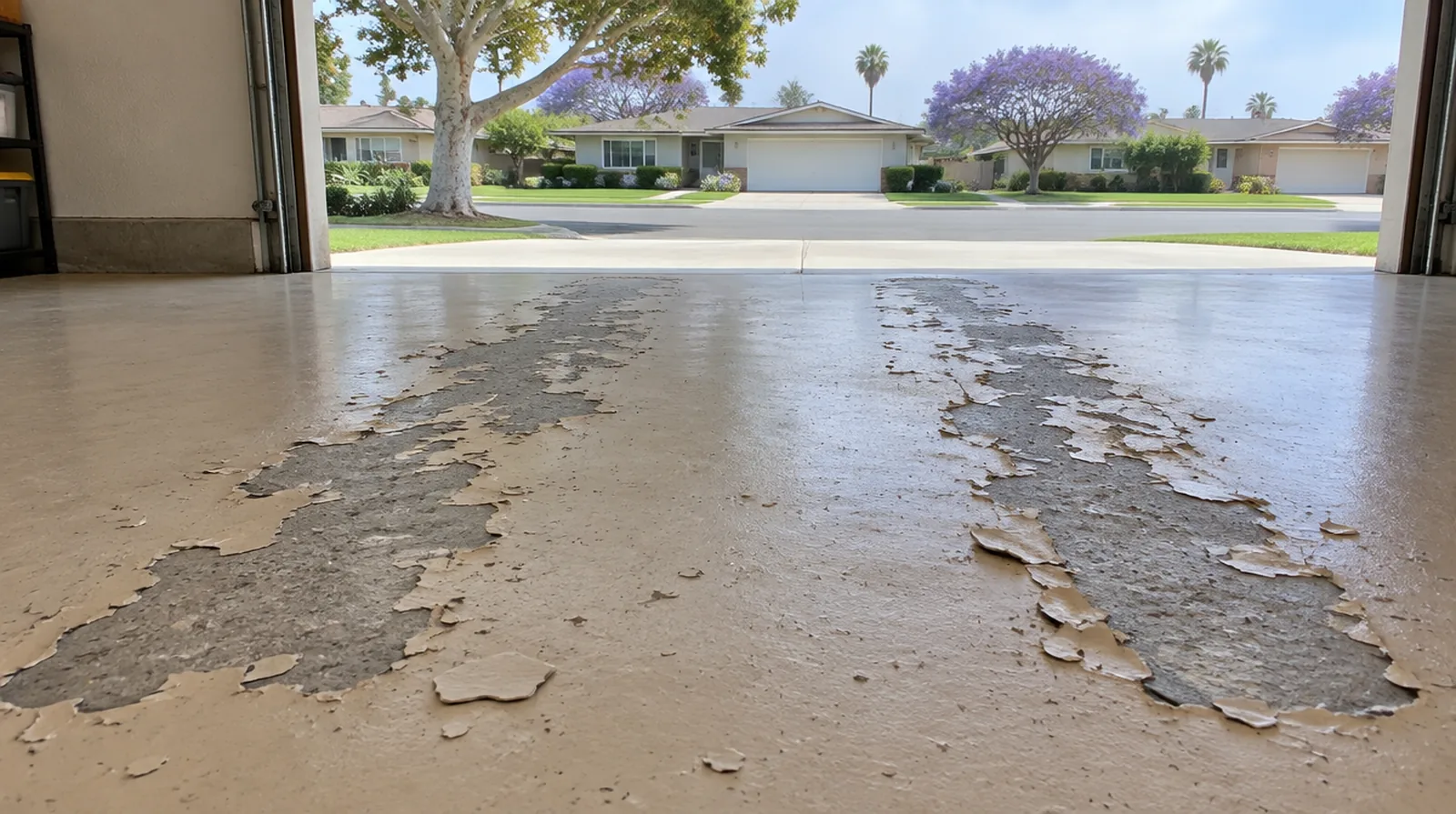
Most coating failures we see in town come from three causes. The first is moisture. Groundwater and missing vapor barriers push vapor up through older slabs, and coatings laid without testing blister and lift. The second is poor preparation. Kits applied over an acid-etched or barely cleaned slab never bond well, especially over old oil stains. The third is the wrong product, such as thin water-based paints that cannot handle hot tires.
Our repair process
Diagnosis
We start by testing moisture, tapping for hollow areas and checking how well the remaining coating is bonded. Sometimes a section can be cut out and patched. Sometimes the whole floor has failed underneath and needs to come off. We explain what we find and show you why.
Spot repairs
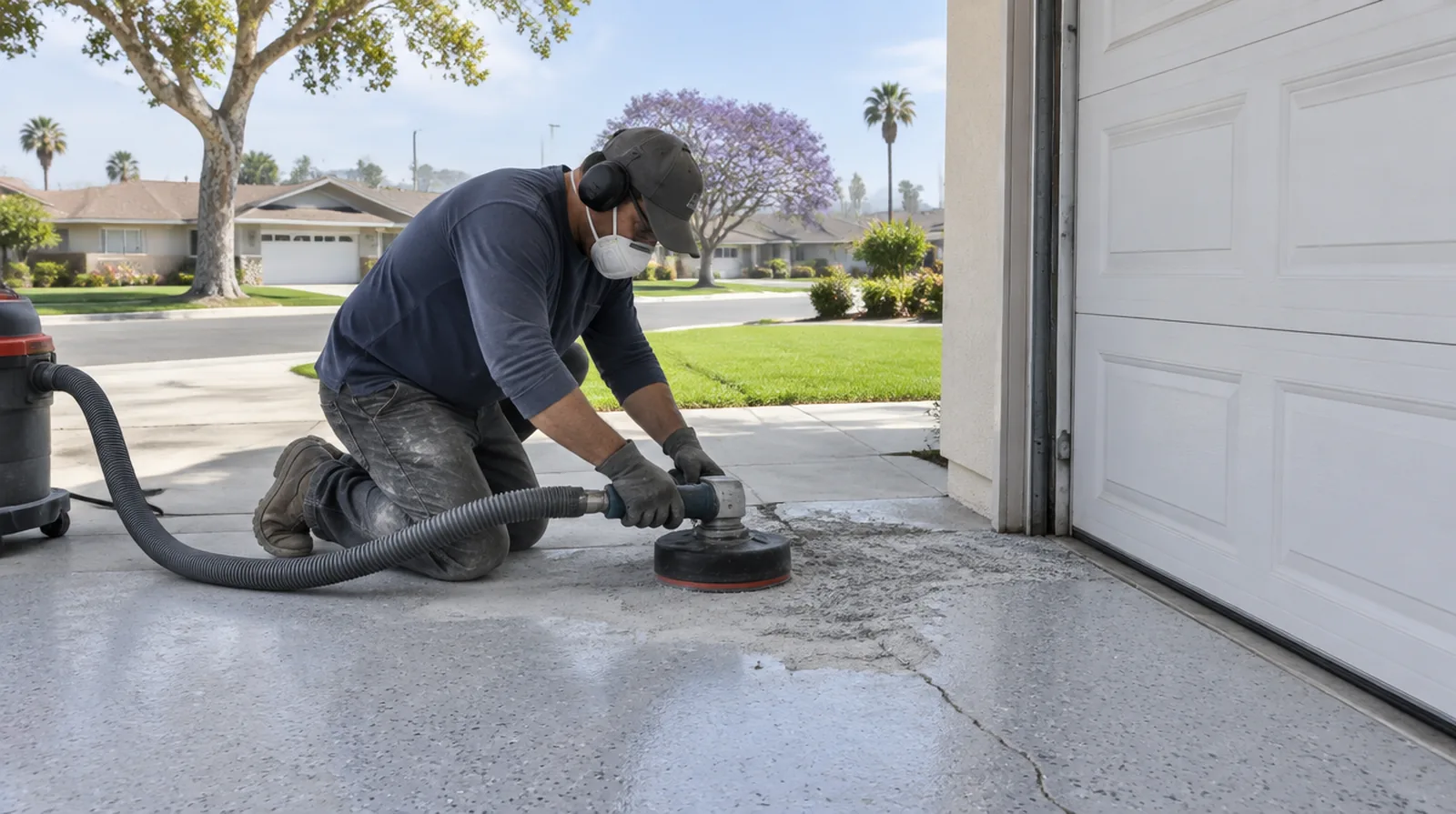
Small chips from dropped tools, scratches and isolated peeling can be repaired. We grind out the damaged area, feather the edges, fill and recoat. On flake floors, we broadcast matching chips so the patch blends in, then topcoat the area or the whole floor for an even sheen.
Full removal and replacement
When adhesion has failed across the floor, patching only buys a few months. We grind off the old coating completely, treat the moisture or contamination that caused the problem and install a new system on clean, sound concrete.
Cracks and spalling
Older slabs develop cracks as they age, and the edge near the garage door often chips and scales where water collects. We open cracks, fill them with rigid or flexible fillers depending on movement and rebuild spalled areas with epoxy mortar before coating.
Stains and discoloration
Yellowed epoxy near the door, tire marks and chemical stains can often be fixed with a fresh UV-stable topcoat after a light sanding. If the stain has soaked through the coating, we grind it out and rebuild the area.
Recoats
Floors that are bonded well but worn and dull can be scuffed and recoated in a day. That restores shine and protection at a fraction of the cost of a new floor.
Rental and resale properties
Landlords and sellers often need a peeling garage fixed quickly before a new tenant or a listing. We can schedule fast-cure repairs and recoats so the garage photographs well and holds up for the next owner.
Questions
Can you match my old color?
Usually close. A full topcoat helps blend the repair.
Why did my floor bubble?
Most often moisture vapor or air escaping from the concrete during application.
Will the repair last?
Yes, when the cause is fixed and the area is properly prepared.
Floor peeling or chipped? Send us photos and book a visit.
What a failed floor tells us
The pattern of damage often reveals the cause. Peeling in tire paths points to hot tire pickup or poor prep. Bubbles scattered across the floor suggest moisture or outgassing. Peeling along the edges near walls often means water from irrigation is getting under the coating. Discoloration near the door is UV damage on a coating without a proper topcoat. Reading these signs lets us fix the cause so the new floor does not fail the same way.
Irrigation and drainage
Lawns and planters along garage walls are common here. Sprinklers aimed at the wall or poor drainage can soak the slab edge and push water under coatings. We point out these issues and suggest simple fixes, like adjusting sprinkler heads, before recoating.
Repairs on commercial floors
Shop, warehouse and restaurant floors often wear out in specific zones, such as forklift turning areas, dish rooms or wash bays. We can cut out and rebuild just those areas with a stronger system, then topcoat the full floor for a uniform finish, saving the cost of redoing the whole building and keeping downtime short.
We also keep records of each repair, so if anything changes later you have a clear history to share with us or a future buyer.
Get your floor repaired
Call (714) 942-1604 for a free estimate.