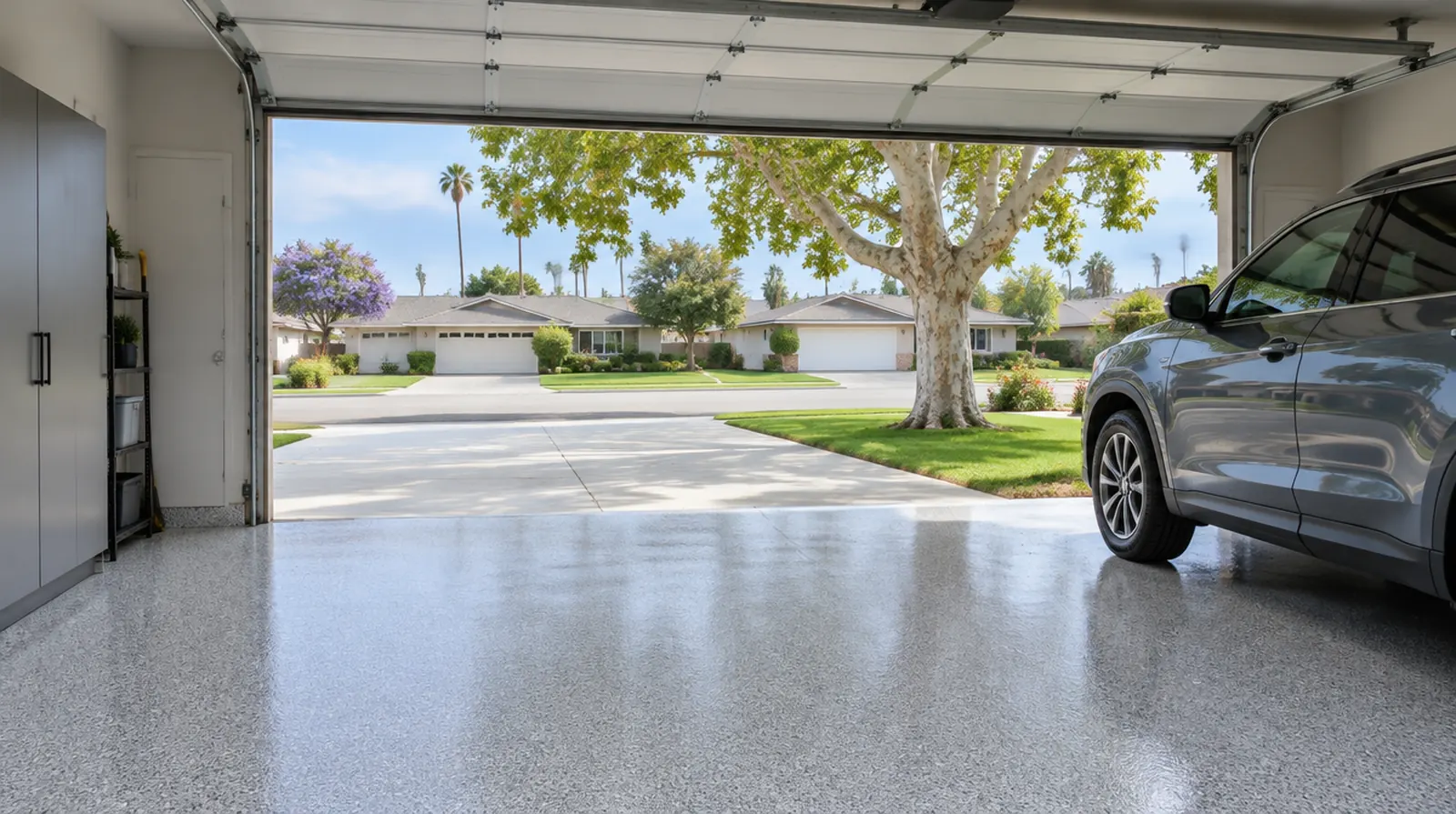
What polyaspartic is
Polyaspartic is a type of polyurea coating. It cures much faster than epoxy, often hardening within hours, and it resists ultraviolet light so it will not yellow near an open garage door or on a sunny patio. It is also flexible and abrasion resistant, which helps it handle temperature swings and heavy use. For many homeowners the biggest benefit is simple: the job can often be done in one day.
Why it suits this city
Polyaspartic keeps curing well in cool, humid conditions, which is helpful during foggy mornings and the cooler months. Because it cures quickly, there is less time for airborne dust and moisture to affect the surface. And because it resists UV, it is a smart topcoat for garages that sit open on weekends and for covered patios that catch afternoon sun.
A typical one-day install
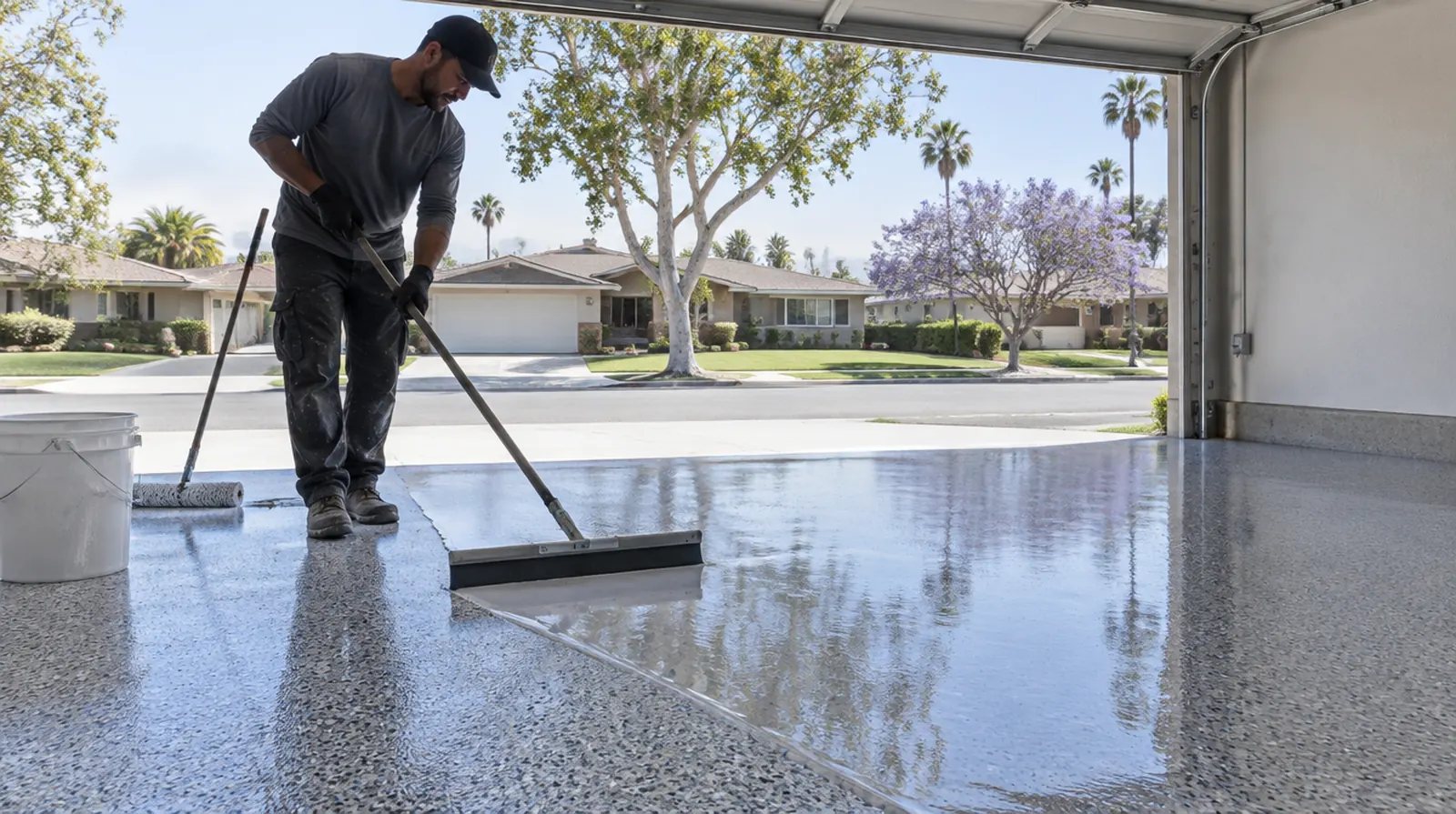
We arrive early, test moisture and diamond grind the slab. Cracks and chips are repaired with fast-setting fillers. A base coat goes down, followed by a full flake broadcast if you choose flake. Once the base is firm, we scrape and vacuum the loose chips, then apply the clear polyaspartic topcoat. Foot traffic is usually allowed by evening, and light vehicles can park in about a day.
When one day is not enough
If moisture readings are high or the slab needs heavy repair, we may add a moisture-mitigating primer that requires extra cure time. We will tell you before we start so the schedule is clear.
Polyaspartic versus epoxy
Epoxy builds thickness affordably and bonds very well, but it cures slowly and yellows under UV without a topcoat. Polyaspartic cures fast and stays clear, but it costs more per gallon and has a short working time that demands an experienced crew. Many of our best floors combine the two: an epoxy base for build and bond, and a polyaspartic topcoat for speed and UV protection.
Where we use it
- Garages for families who cannot spare their parking for a week
- Covered patios and breezeways
- Laundry rooms and mud rooms
- Retail and restaurant floors that must reopen quickly
- Rental homes between tenants
Finish options
Polyaspartic can be clear over flake, tinted as a solid color or used over a quartz broadcast for extra texture. Gloss and satin sheens are available. Anti-slip additives can be mixed into the topcoat for wet areas.
Care
Polyaspartic floors clean with a soft broom and a damp mop. Avoid harsh acids. Use pads under kickstands and jacks. The surface resists hot tire pickup, oil and most household chemicals.
Questions
Does it smell?
There is an odor during application that fades within a day with ventilation.
Can it go outdoors?
Yes, it is UV-stable and works on patios and walkways.
Is it more expensive?
Usually somewhat, but the time saved matters to many owners.
Need it done fast? Ask about a one-day floor.
Rental turnovers and home sales
Property owners preparing a home for new tenants or for sale often have a tight window. A polyaspartic flake floor can be installed one day and photographed the next. Buyers notice a clean, bright garage, and tenants appreciate a floor that is easy to keep clean. Because it is durable, it also reduces wear and repair costs between tenancies. We work with property managers to schedule access and keep the process simple, sending photos when the job is done so owners who live elsewhere can see the result.
Quartz systems for wet areas
For laundry rooms, side entries and covered patios that get wet, we often recommend colored quartz sand broadcast into the base with a polyaspartic topcoat. Quartz is harder than vinyl chips and provides strong, lasting traction. It is a great choice for households with kids and pets running in from the yard, and it holds up to hoses and frequent cleaning.
Ask about color-matched cove edges along garage walls, which keep sweepings and water from collecting at the base of drywall.
Book a one-day floor
Call (714) 942-1604 for a free estimate.